

Introducing 'eeger': A New Era for Hospitality Careers in Australia
Government's Initiative to Strengthen the Hospitality Workforce
The information on this website is general in nature and does not take into account your objectives, financial situation, or needs. Consider seeking personal advice from a licensed adviser before acting on any information.
The Australian hospitality industry has long been a cornerstone of the nation's economy, offering diverse experiences to both locals and tourists.
However, recent challenges, including labour shortages and the need for skilled workers, have prompted the government to take proactive measures.
In response, the Australian government, in partnership with Accommodation Australia, has unveiled 'eeger', a comprehensive platform designed to attract, train, and retain talent within the tourism, hospitality, and travel sectors.
Launched in July 2025, 'eeger' serves as a centralised hub, amalgamating job vacancies, training programs, and career development resources. This initiative aims to bridge the gap between job seekers, employers, and educators, fostering a more robust and skilled workforce. Emilie Howe, General Manager of 'eeger', emphasised the platform's industry-centric design, stating, "It's a unique solution that centralises career, job, and training information for our workforce needs - the first of its kind on a national scale."
The platform's introduction comes at a crucial time. The hospitality sector has been grappling with a significant skills shortage, exacerbated by the COVID-19 pandemic and subsequent economic challenges. By providing a streamlined avenue for individuals to access training and employment opportunities, 'eeger' is poised to revitalise the industry and ensure its sustainability.
For restaurant and café owners, this development offers a beacon of hope. The ability to tap into a pool of trained and motivated individuals can alleviate staffing challenges, enhance service quality, and ultimately drive business growth. Moreover, the platform's emphasis on training ensures that new entrants are equipped with the necessary skills to meet industry standards.
In conclusion, the launch of 'eeger' represents a significant step forward in addressing the workforce challenges faced by the Australian hospitality industry. By fostering collaboration between the government, industry bodies, and educational institutions, this initiative is set to strengthen the sector's foundation and pave the way for a prosperous future.
Please Note: We do not endorse any specific products or companies. Some content is sourced from third parties, including press releases, and may not be independently verified for accuracy or completeness.
Australia's latest seasonal weather signals have again pushed rainfall risk into the foreground for rural and regional businesses. While conditions vary sharply between districts, a wetter outlook for parts of the country is a useful reminder that risk planning should not wait until paddocks are already saturated, creek crossings are cut or machinery is bogged at harvest. - read more
Fresh insurance industry concern about underinsurance is especially relevant for Australian farmers as rebuilding and replacement costs remain stubbornly high. While the issue is often discussed in relation to houses, the same pressure applies across rural assets: sheds, fencing, pumps, tanks, grain storage, livestock yards, irrigation equipment and machinery can all cost significantly more to replace than they did when a policy was first arranged. - read more
Australia's general insurance sector has again put natural hazard resilience at the centre of the affordability debate, with fresh industry commentary warning that floods, bushfires, storms and cyclones are continuing to reshape how risk is priced. For farmers, this is not an abstract policy discussion. It goes directly to the cost and availability of farm insurance, particularly for properties with older buildings, exposed machinery, flood-prone access roads, boundary fencing, stored fodder or high-value livestock. - read more
Allianz Australia has refreshed its farm pack insurance, with the updated product announced on 20 July 2026. For farmers and rural property owners, the significance is less about one insurer changing a product and more about what it signals across the broader farm insurance market: insurers are trying to make cover easier to understand while adjusting policy features to better match modern farming operations. - read more
More Australian insurers are now recognising household bushfire resilience ratings, a development rural and regional property owners should watch closely as risk-based pricing becomes more visible across the insurance market. NAB and CommBank insurance brands have joined the program, alongside existing participants including NRMA Insurance and Suncorp, meaning a significant share of the home insurance market is now engaging with assessed bushfire mitigation. - read more
The Australian Competition and Consumer Commission's final monitoring report on the cyclone reinsurance pool has delivered a mixed message for rural and regional northern Australia. The pool appears to have helped ease some premium pressure for medium to high cyclone-risk areas, including reductions across home, strata and small business building and contents cover. For farm families and agribusinesses in cyclone-exposed regions, that is welcome news after years of rising costs and limited choice. - read more
In the ever-evolving landscape of modern agriculture, the security and stability of a farm hinge on thorough preparation and strategic foresight. A pivotal component in safeguarding a farm's future lies in the critical role of on-farm risk assessment. This process provides a structured approach to identifying potential risks that could affect a farm's operations, financial health, and overall sustainability. - read more
For Australian farmers, having the right insurance coverage isn't just a safety net—it's an integral part of sustaining their livelihood. Natural disasters, unpredictable climate conditions, and the inherent risks of agricultural production underline the critical importance of robust insurance for the agricultural community. As farmers navigate the complexities of insurance, understanding the basics becomes the first step toward securing their assets and ensuring the continuity of their operations. - read more
As a farmer, you know that unexpected events can have a significant impact on your farm and your livelihood. Natural disasters, such as floods, fires, droughts, and storms, can occur at any time and have devastating consequences. That's why it's crucial to have a comprehensive disaster response plan in place to protect your property, assets, and, most importantly, your loved ones and livestock. - read more
Australian farms that use employees, contractors, seasonal labour, family help or volunteers need to understand how workers compensation, public liability and contractor insurance can interact. This article explains the key insurance issues to review, why state and territory rules matter, and what farm operators should check before people start work. - read more
Farm property insurance can help protect the fixed assets on rural land, including farm buildings, sheds, fencing, tanks, yards and other infrastructure. This guide explains what may be covered, how values are usually reviewed and what details to check before comparing policy options. - read more
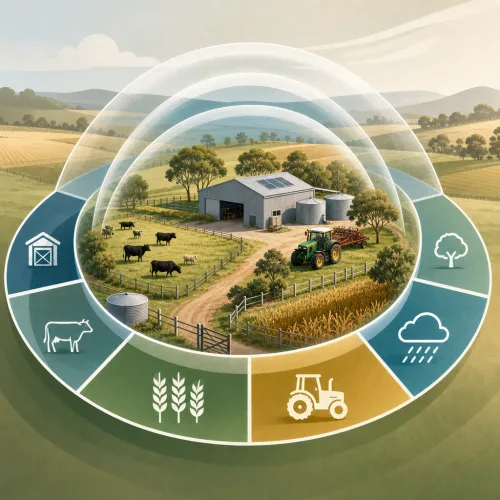
Welcome to our comprehensive guide on navigating farm succession for rural Australian families. The journey of passing on a family farm from one generation to the next is both a critical and challenging milestone. Recognizing that every farm has its unique story and set of circumstances is fundamental to the process. - read more
Need a Quote?
Start your free farm insurance quote comparison here.
Knowledgebase
Loss Ratio: The ratio of claims paid by an insurer to the premiums earned, used as a measure of profitability.
No comments yet. Be the first to share your thoughts.