The information on this website is general in nature and does not take into account your objectives, financial situation, or needs. Consider seeking personal advice from a licensed adviser before acting on any information.
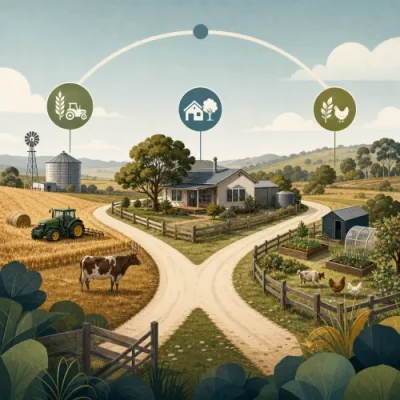
Farm insurance, rural property insurance and hobby farm cover can overlap, but they are not the same. The right structure depends on how the property is used, whether it produces income, what assets are on site and the liability risks involved.
Farm insurance, rural property insurance and hobby farm cover can sound similar, especially when a property includes a home, land, sheds, fencing, animals and machinery. In Australia, the difference is usually less about the size of the block and more about how the property is used, whether it earns income, and what risks an insurer is being asked to cover.
This guide explains the practical differences between farm insurance, rural property cover and hobby farm insurance in Australia. It is general information only and does not consider your personal objectives, financial situation or needs. Policy availability, pricing and cover depend on your circumstances and the insurer’s criteria.
The short answer: the use of the property matters most
A rural property with a house and a few acres may need a different insurance arrangement from a working farm, even if both properties have sheds, fencing and animals. Insurers commonly look at factors such as:
- whether farming is carried out for commercial income;
- the type and number of livestock kept;
- whether crops, produce or animals are sold;
- the value and use of machinery, tractors and equipment;
- whether customers, contractors, workers or visitors come onto the property;
- whether there are farm buildings, irrigation systems, yards, tanks or extensive fencing;
- the property’s exposure to bushfire, flood, storm, cyclone, theft or other local risks.
For some owners, a rural home policy with selected extras may be enough. For others, a commercial farm insurance package may be more appropriate. Many properties sit somewhere in the middle, which is why describing the property accurately is important when requesting farm insurance information or quotes.
Farm insurance vs rural property insurance: a practical comparison
| Type of cover |
Typical property situation |
Common focus |
Key questions to ask |
| Farm insurance |
A working or income-producing farm, including small farms and agribusiness operations |
Farm assets, machinery, livestock, crops, liability and business interruption options, depending on the policy |
What farming activities are insured? Are crops, livestock, machinery and business liability included or optional? |
| Rural property insurance |
A rural home, acreage or lifestyle property with limited or no commercial farming |
Home, contents, sheds, fencing and fixed rural assets, subject to policy terms |
Are rural outbuildings, fences, tanks, pumps and domestic-use machinery covered? |
| Hobby farm cover |
A lifestyle property with small-scale animals, gardens, orchards or occasional produce sales |
A blend of home, rural property and limited farm-related risks, depending on the activities |
At what point do livestock, sales, visitors or machinery use require farm or business-style cover? |
The labels are only a starting point. Insurers may use different product names, underwriting criteria and exclusions. Always read the Product Disclosure Statement and, where available, the Target Market Determination before deciding whether a policy is suitable for your circumstances.
What farm insurance is usually designed for
Farm insurance is generally designed for properties where agricultural activity is more than incidental. That may include cropping, grazing, dairy, horticulture, viticulture, mixed farming, intensive animal operations or other agribusiness activities.
A farm insurance package may bring together several sections of cover. Depending on the insurer and policy, this can include farm buildings, sheds, fencing, machinery, tractors, livestock, crops, liability, theft, fire, storm and business interruption options. Some covers may be included automatically, while others may need to be selected and listed separately.
Farm insurance may be relevant where the property owner:
- earns meaningful income from farming or primary production;
- uses machinery for farming operations rather than purely domestic acreage maintenance;
- keeps livestock at a scale that creates commercial or higher liability risk;
- sells crops, animals, wool, eggs, produce or other farm products;
- employs workers, uses contractors or hosts customers, buyers or other visitors;
- has valuable farm infrastructure such as yards, silos, irrigation equipment, pumps, tanks or specialised sheds.
For a broader explanation of common policy sections, see what farm insurance can cover in Australia.
What rural property insurance usually focuses on
Rural property insurance is often more focused on the residential and fixed property risks of owning land outside a town or city. It may be suitable for some acreage owners who live on rural land but do not operate a commercial farm.
Depending on the policy, rural property cover may include the home, contents, domestic outbuildings, sheds, tanks, pumps, fencing and other fixed improvements. It may also take into account rural-specific risks such as bushfire exposure, distance from emergency services, water supply and access to the property.
However, rural property insurance may not automatically cover commercial farming activities. It may also have limits or exclusions for machinery, livestock, produce sales, paid agistment, farm contracting, farm stays or other business activities. If the property has fixed rural assets, it can be useful to understand how farm property insurance treats buildings, sheds, fencing and fixed assets.
What hobby farm insurance means in practice
Hobby farm insurance is not always a single standard product category. In practice, it usually refers to insurance for lifestyle acreage where the owner keeps animals, grows produce or carries out small-scale farming activities that may not be their main source of income.
Examples can include a property with a few cattle or sheep, horses for personal use, chickens, a small orchard, a vegetable garden, beehives or occasional market sales. The challenge is that a hobby farm can still create risks that a standard home policy may not be designed to cover.
Hobby farm insurance in Australia may need to address questions such as:
- Are animals kept for personal enjoyment, breeding, sale or agistment?
- Is produce sold at markets, from the farm gate or through local retailers?
- Is any part of the property used for accommodation, events, lessons or tourism?
- Are tractors, slashers, quad bikes or other machinery used?
- Do friends, volunteers, contractors or paid workers help on the property?
- Could a visitor, neighbour or buyer be injured or suffer loss connected with the property?
A hobby farm may need a tailored arrangement that blends rural property cover with selected farm or liability sections. The right approach depends on the actual activities, not just whether the owner considers the property a hobby.
Where small farms can fall between categories
Small farm insurance can be more complex than the name suggests. A small property may have a high-value enterprise, while a large acreage may have very limited farming activity. For example, a small intensive horticulture operation may need more specialised cover than a larger lifestyle block with a few paddocks and no sales.
Insurers may look at the scale and nature of the operation, including turnover, stock numbers, infrastructure, machinery values, product sales and liability exposure. A property might move from rural property cover toward farm insurance if the farming activity becomes regular, commercial or materially higher risk.
Changes that may trigger a review include:
- starting to sell livestock, eggs, honey, fruit, vegetables or other produce;
- adding agistment, farm stays, tours, open days or on-farm events;
- buying higher-value machinery or using machinery away from the property;
- expanding fencing, yards, sheds, cool rooms, irrigation or water infrastructure;
- employing staff, using seasonal labour or engaging contractors more regularly;
- moving from personal-use animals to breeding, training, transport or sale.
Examples of how the differences can work
Lifestyle acreage with a home and a few animals
An owner lives on a rural block with a house, a shed, fencing, a ride-on mower and a few animals kept for personal use. If there is no commercial activity, a rural home or rural property policy may be the starting point. The owner should still check whether sheds, fencing, animals and equipment are covered and whether any animal-related liability exclusions apply.
Hobby farm selling produce occasionally
An acreage owner keeps chickens, grows vegetables and sells produce at local markets from time to time. Even if the income is modest, product sales may introduce business and liability considerations. The owner should disclose the sales activity and ask whether hobby farm, farm liability or product liability cover is needed.
Small commercial grazing or cropping operation
A family runs cattle or crops on a smaller rural property and relies on the activity for income. The property may need farm insurance rather than a rural residential policy, particularly if livestock, crops, machinery, sheds, fencing, yards and business interruption risk are significant.
Rural property with paid agistment
A landowner allows other people’s horses or livestock onto the property for payment. This can create different liability and animal care exposures from keeping animals for personal use. The owner should disclose the arrangement and check whether the policy responds to paid agistment activities.
Why disclosure matters when choosing cover
When applying for or renewing insurance, property owners should answer insurer questions honestly and completely. If farming activities, livestock, machinery use, paid visitors or product sales are not disclosed, there may be issues at claim time, depending on the policy and circumstances.
Useful information to gather before seeking quotes includes:
- property size, location and main use;
- details of homes, sheds, fencing, tanks, pumps, yards and other improvements;
- machinery and equipment lists, including estimated values;
- livestock types and numbers;
- crops, orchards, vines or other production details;
- any produce sales, agistment, tourism, events or contracting activities;
- details of employees, contractors, volunteers or regular helpers;
- past claims, known hazards and risk controls such as firebreaks, locks, alarms or water access.
If the boundary between rural property insurance, hobby farm cover and farm insurance is unclear, speaking with a suitably licensed insurance professional or using the site’s broker information may help you ask more targeted questions. Any recommendation should take into account your circumstances and the relevant policy documents.
Common traps to avoid
- Assuming acreage automatically means farm insurance. Some rural properties are primarily residential and may not need a commercial farm policy.
- Assuming “hobby” means low risk. Animals, machinery, visitors and produce sales can still create significant liability or property risks.
- Only insuring the house. Sheds, fencing, tanks, pumps, yards and machinery can be expensive to repair or replace.
- Not updating cover as the property changes. New livestock, machinery, crops, sheds or income-producing activities may affect the policy.
- Comparing premiums without comparing exclusions. A cheaper premium may reflect narrower cover, lower limits or higher excesses.
- Overlooking visitor and contractor risks. Even occasional visitors, buyers, contractors or helpers can change the liability picture.
Questions to ask before deciding which cover fits
Before choosing between farm insurance, rural property insurance or hobby farm cover, consider asking insurers or brokers:
- Is this policy intended for residential rural property, hobby farming or commercial farming?
- Which activities must be listed or disclosed separately?
- Are livestock, crops, machinery and farm infrastructure covered, limited or excluded?
- How are sheds, fencing, tanks, pumps, yards and other fixed assets insured?
- Does the policy cover public liability connected with animals, visitors or produce sales?
- Are product liability, agistment, accommodation, events or tourism activities excluded?
- What excesses, sub-limits and exclusions apply to bushfire, storm, flood, theft or machinery damage?
- What evidence would be needed if a claim is made?
Final Thoughts
The difference between farm insurance, rural property insurance and hobby farm cover is mainly about use, income, assets and liability risk. A rural home with a few animals may have very different insurance needs from a small commercial farm, even if the properties look similar from the road.
The safest starting point is to describe the property and activities accurately, list the assets that need protection, and check the policy documents carefully. Where the boundary is unclear, ask whether your activities are treated as residential rural use, hobby farming or commercial farming before relying on a policy.
Published: Thursday, 26th Nov 2026
Author: Paige Estritori




No comments yet. Be the first to share your thoughts.